
Herbs · October 2026
The Humble Nettle
An old friend with a fiery temperament
Urtica dioica | Stinging Nettle
I don't think there's a child in Guernsey who hasn't had a run-in with a nettle. Running through the lanes, a bit too adventurous, and suddenly that unmistakable sting creeping up your legs. What did we do? Find a dock leaf, of course.
They always seemed to be there, didn't they? Dock and nettles grow side by side, and now we know why. They like the same rich, disturbed ground. Plenty of people swear a dock leaf really does ease the sting, and dock contains tannins, which may be part of the reason. Whether it's the chemistry, the cool leaf, or just the good old rubbing, I still reach for a dock leaf when I get stung. Some habits stay with you.
Nettle through the ages
Herbalists have valued nettle for centuries, and in country tradition it was a favourite spring tonic after the long winter. It also naturally contains minerals like calcium, magnesium, potassium and iron, along with chlorophyll and other plant compounds.
Today, most people enjoy it as a deeply green, earthy tea, or in spring soups. If you have any health concerns, it's always best to speak to your doctor.
What the old herbalists said
Nicholas Culpeper said nettles needed no description: you could find them by feeling, even in the dark. He placed them under Mars, seeing them as a warming, drying plant that stirred things into action after the dampness of winter.
Matthew Wood looks at where a plant grows and what that might tell us. Nettles love rich, nitrogen-filled soil, which he connects with the way herbalists have traditionally used the plant. It's not proof, but an observation, and a useful way to think about a plant's character.
A plant with character
Nettles don't try to be pretty. They're fierce, upright and full of life. Those tiny hairs on the leaves and stems act like little glass needles, breaking on contact and releasing histamine and other compounds that cause the familiar burning sting.
But cook them, dry them or steep them in hot water, and the sting disappears. What's left is a deeply green plant that has fed people, clothed them and been part of herbal tradition for centuries.
One plant, many parts
The leaf is the part most of us know: mineral-rich, deeply green and lovely as a regular cup.
The root has its own, quite different place in herbal tradition. It's a different part of the plant, with different compounds to the leaves.
Nettle seed is another story again, and a favourite of many herbalists. It's not just a stronger version of the leaf.
The nettle, part by part

Leaves
Nourishing tea, spring soups. In herbal tradition, long associated with the urinary system.
Seeds
Traditionally valued by herbalists as a restorative. Collected in late summer.
Flowers
Less commonly used on their own, but part of the plant's story. Male and female plants have flowers.
Roots
Historically used by herbalists for men's urinary health, including the prostate. Different compounds to the leaves.
When to gather
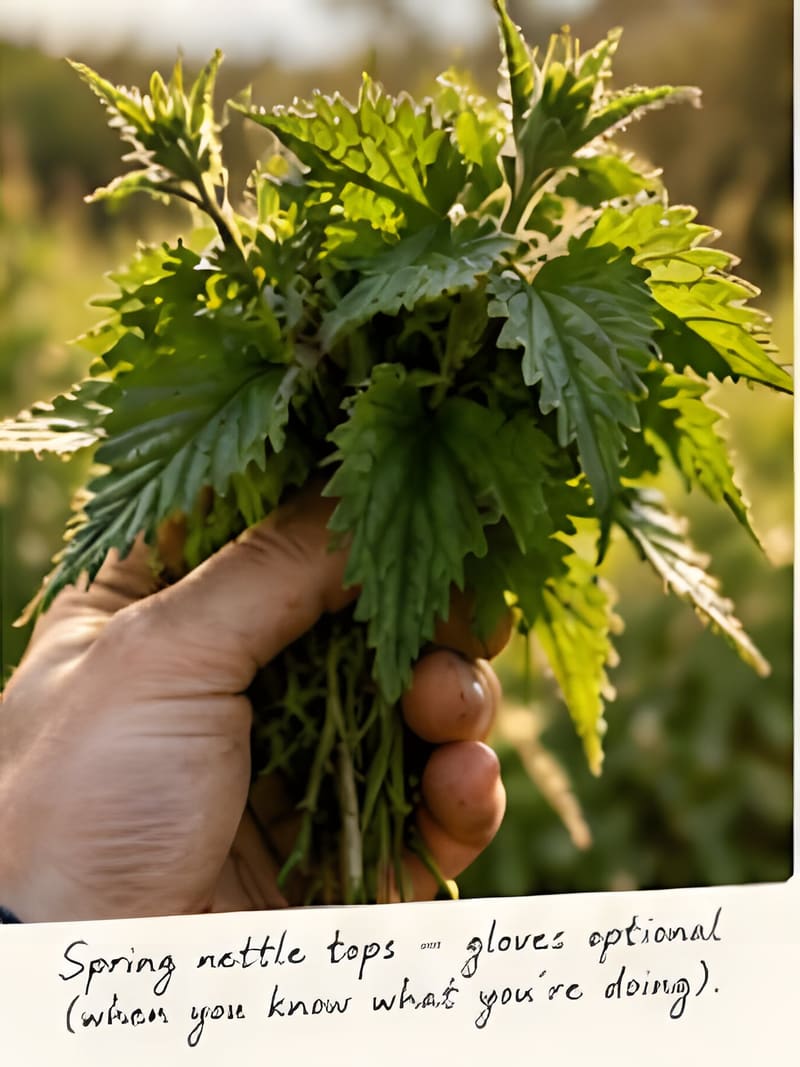
The best time for leaves is spring, before the plant flowers, when the tops are young and tender. Use gloves unless you fancy a reminder of your childhood! Seeds are collected from female plants in late summer, and roots in autumn or early spring.
A Simple Nettle Infusion
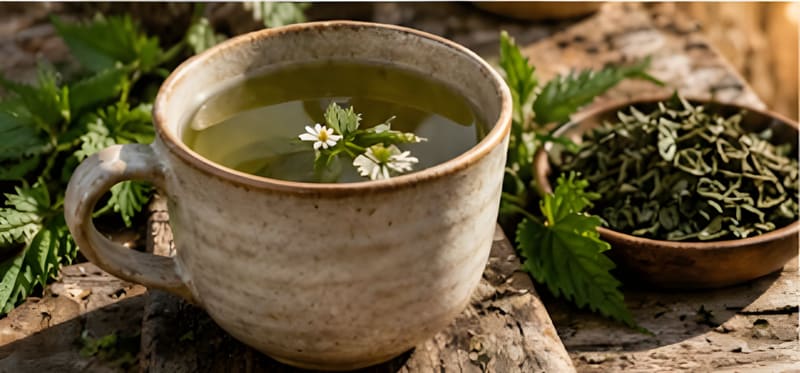
- 2–3 g dried nettle leaf
- 250 ml freshly boiled water
- Infuse for 5–10 minutes, then strain.
Tips
Try it on its own first, then add a little lemon balm or rosehip. For a stronger taste, leave it a bit longer. Enjoy a few cups as part of your seasonal routine, rather than every day for months on end.This article is for general interest only and isn't a substitute for advice from a doctor or qualified health professional. If you're pregnant, breastfeeding, taking medication or have a medical condition, please check with your doctor before trying nettle. Herbal safety information