
The Power of Beetroot
A childhood of Dad’s wonky beetroot, a pregnancy craving, and the surprising chemistry hiding under the mud.
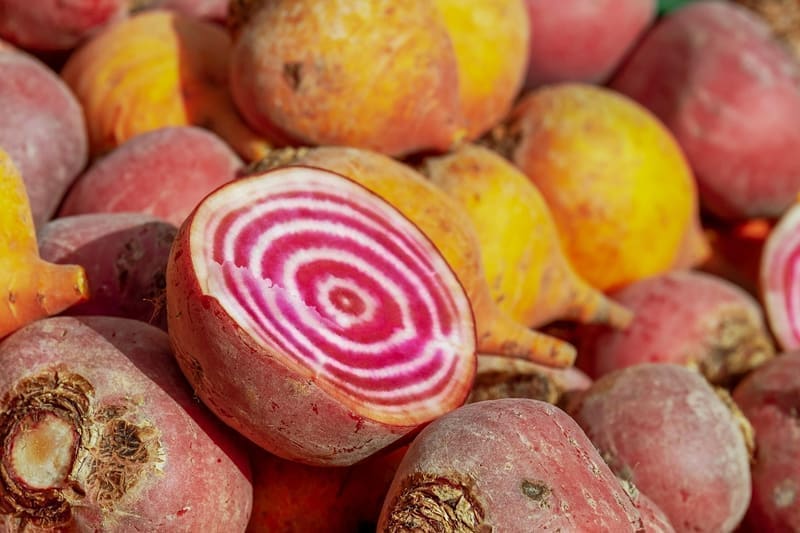
I’ve always had a bit of a thing for beetroot, although I probably inherited it from Mum. She’s been on the beetroot wagon forever, and Dad always grew them, usually in slightly questionable shapes. He won first prize for his beefsteak tomatoes at the North Show this year, which he was quite rightly proud of, but honestly, the beets were the winners in my book, however wonky they were.
Mum was always like that with food too. Long before I knew anything about herbs or plant chemistry, she seemed to have an instinct for feeding us the things she thought would do us good.
When I was pregnant with Jake and then breastfeeding him, she would arrive with beetroot, Brazil nuts, walnuts and a myriad of other things to keep me well fed. He was an incredibly hungry baby, so anything Mum appeared with was gratefully received.
Then a couple of years later I was pregnant with Elle, and suddenly I was the one on the beetroot wagon. Beetroot and feta. Constantly. I craved the stuff like nobody’s business.
Was it simply a pregnancy craving, or was my body somehow remembering beetroot from all those years of Mum’s cooking? Who knows. But I find that thought fascinating.
I hadn’t studied herbalism in the depth I have now, and I certainly wasn’t thinking about nitrates or nitric oxide. I just knew I wanted beetroot.
Weird how the body remembers, eh?
Because it turns out that underneath the mud, the wonky shapes and its extraordinary ability to stain everything it touches, beetroot has some rather interesting chemistry.
So what’s so special about beetroot?
Beetroot is naturally rich in dietary nitrates. Once we eat them, the body can convert those nitrates into nitric oxide (NO), a tiny signalling molecule that scientists find fascinating.
Nitric oxide is known for its role in the blood vessels, where it signals the muscle around them to relax. That’s why beetroot has attracted so much attention from researchers interested in circulation.
The body’s own nitric oxide production is also known to change as we get older, which is one reason researchers have been so curious about foods like beetroot that offer another route to it.
Your nose and mouth are in on it too
This is probably my favourite bit, because the body is ridiculously clever.
Our nose and sinuses produce nitric oxide too. When we breathe through our noses, some of that NO travels with the air we breathe in. So nasal breathing isn’t just one of those wellness things somebody invented for Instagram. Our noses actually have a job.
Then we get to the mouth. After eating nitrate-rich foods such as beetroot, some of those nitrates find their way back into our saliva. Friendly bacteria living on the tongue convert nitrate into nitrite, which the body can then turn into nitric oxide.
So your mouth isn’t simply where the beetroot goes in. It’s part of the chemistry.
It also means those bacteria we’ve spent years trying to annihilate with industrial-strength mouthwash aren’t all freeloaders. Some of them are working for us. Researchers have found that strong antibacterial mouthwash can interfere with this conversion, so I wouldn’t be reaching for it straight after my beetroot and feta.
We really are walking ecosystems.
Why beetroot gets studied so much
That nitric oxide connection is why beetroot has become one of the most researched vegetables around. It’s been studied in relation to blood pressure, circulation and exercise, and it’s found its way into sports nutrition too, where athletes are interested in its links with stamina. Results vary from study to study and person to person.
Beetroot isn’t just about nitrates, either. That glorious deep red colour comes largely from betalains, plant pigments known for their antioxidant properties.
That’s why I don’t particularly like reducing beetroot to “a natural remedy” for anything. Plants rarely work that neatly. It’s simply a very good food with some genuinely interesting chemistry.
How do we actually eat it?
Nothing heroic is required.
Roast it with herbs and olive oil. Steam it. Grate it raw into a salad. Pickle it. Put a little beetroot powder into a smoothie if that’s convenient. Or have it with feta, which I can personally confirm is still an excellent combination all these years later. 😂
Much of the research has used beetroot juice, because it makes the amount of nitrate easier to measure. But beetroot isn’t the only source: rocket, spinach, celery and other leafy greens can be naturally rich in nitrate too.
One other thing before you message me in horror after going to the loo: beetroot can turn urine, and sometimes stools, pink or red. It’s called beeturia, and it’s usually completely harmless.
Dad’s beetroot wasn’t content with staining the chopping board. Apparently it wanted the whole digestive tract involved too.
But more is not better
This is an important one, because we’ve developed a rather strange relationship with healthy foods.
Someone discovers that a vegetable contains something interesting, and five minutes later the internet has us putting half the greengrocer’s into a blender and calling it a detox.
Please don’t read this and start drinking enormous daily concoctions of beetroot, raw spinach, handfuls of greens and citrus because somebody on YouTube says it will “cleanse your liver”.
Beetroot, and particularly spinach, contain oxalates. For most people eating these foods normally, as part of a varied diet, that’s not a reason to fear them. But concentrating very large amounts into daily juices and smoothies is a different thing altogether, and it’s not a good idea, especially if you have kidney problems or a history of kidney stones. If that’s you, have a chat with your doctor.
Juicing also makes it remarkably easy to consume far more raw plant material than you’d ever sit down and chew. As Mum always said, balance is key: a little bit of everything. And chewing matters! It’s the start of proper digestion.
Your liver is already exceptionally good at doing its own housekeeping. It doesn’t need punishing with a daily Nutribullet.
Which brings me back to Mum and Dad, really.
Grow it wonky. Roast it. Pickle it. Put it beside your dinner. Eat your greens. Have some nuts. Breathe through your nose. Enjoy lots of different plants, rather than enormous quantities of one supposedly miraculous one.
Plants are wonderful, but more isn’t automatically better.
Dad may have got the first prize at the North Show, but I’m still giving the beetroot the rosette, eh!
Photos of the legendary beets courtesy of Pa Larkin 😂
This article is for general interest only and isn’t a substitute for advice from a doctor or qualified health professional.
This article is for general interest only and isn't a substitute for advice from a doctor or qualified health professional. Herbal safety information